What Happens to Your Online Accounts When You're Gone?
June 12, 2026
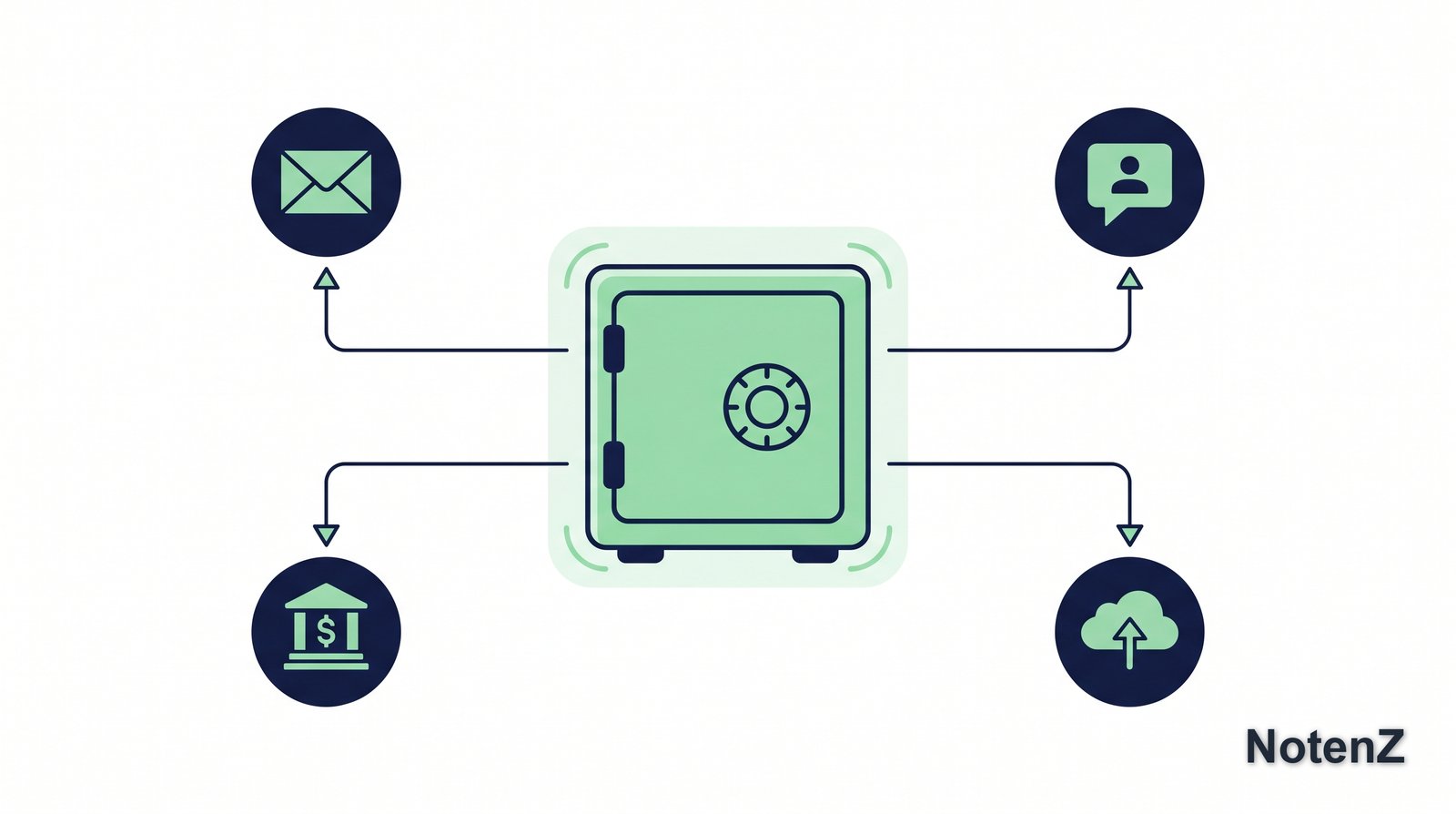
Most people never think about what happens to their online accounts if they're suddenly not around to manage them, and that's understandable. It's not a pleasant thing to plan for. But the accounts don't disappear just because you're not there. Email keeps receiving mail. Subscriptions keep billing your card. Bank logins sit unused. Cloud photo libraries, crypto wallets, social media profiles: all of it stays exactly where you left it, except now nobody else knows where "there" is.
The default outcome: nothing happens, slowly and badly
Without a plan, your accounts don't get neatly closed or transferred. They sit in limbo. Your family may not even know which banks you used, whether you had a will, or where to find life insurance documents, let alone the passwords to get into any of it. Recovering access usually means contacting each provider individually, proving you're no longer able to manage the account yourself (often with legal documentation), and waiting weeks for each one to respond, if they respond at all.
Meanwhile, automatic payments keep drafting from accounts no one can access. Subscriptions renew. Domain names expire. And anything that exists only in your head, like which exchange your crypto is on, or that you have a savings account at a bank your family didn't know about, simply stays lost.
What happens to specific account types
Email. Most providers will not hand over account access to next of kin without a lengthy legal process, and some never will. Without access to email, your family can't reset passwords on anything else, since email is the recovery method for almost every other account.
Banking. Banks freeze accounts once they're notified the account holder is no longer able to manage them, and release funds only through probate, a process that can take months. Joint accounts are the exception, but many people have individual accounts their spouse or family doesn't have access to.
Cryptocurrency. This is the highest-stakes case. If a wallet's seed phrase or private key existed only in your head or on a device only you could unlock, the funds are permanently unrecoverable. There is no "next of kin" process for a self-custodied wallet. There is no customer support to call. Billions of dollars in crypto are estimated to be permanently lost this way.
Subscriptions and recurring payments. These keep charging your card until someone cancels them, which requires knowing they exist in the first place.
Why "just write it down and tell someone" doesn't really work
The common advice is to write your passwords down somewhere and tell a family member where to find them. In practice this creates a different problem: a single static document containing your most sensitive credentials, sitting in a drawer or a notes app, that becomes immediately out of date the first time you change a password, and that anyone who finds it can read right now, not just after you're gone.
What you actually want is something that stays private and inaccessible while you're alive and well, updates easily as your accounts change, and only becomes available to the right people automatically, if and when it's needed, without you having to remember to update a will or notify a lawyer every time you open a new account.
A simple plan: automated check-ins
This is the idea behind a "dead man's switch" for your digital life: you store the information your family would need (passwords, account locations, final wishes, instructions) in an encrypted vault. You check in periodically (say, once a week) with a single click from an email or text link, just to confirm you're okay. If you stop checking in, the service waits through a grace period, tries to reach you across multiple channels, and only then delivers your vault to the people you've designated.
No lawyers, no notaries, no waiting on probate for the information itself. Your recipients get exactly what they need, exactly when they need it, and not a moment before.
What to include in your digital estate plan
- Primary email account credentials and recovery details
- Bank and investment account locations (not necessarily passwords, just where to look)
- Crypto wallet locations and recovery phrases, stored with extra care
- A list of subscriptions and recurring payments to cancel
- Insurance policy details and document locations
- Personal messages or instructions for the people who matter to you
None of this needs to be complicated, and none of it needs a lawyer to set up. It just needs a system that quietly keeps watch, and acts only if it has to.
Want to see what this looks like in practice? Read about how a dead man's switch works, or jump straight to the 5-minute setup guide.
Curious how exposed your own accounts are right now? Try the free Lockout Risk Calculator, a 60-second quiz that scores your digital estate risk.