Dead Man's Switch: What It Is and How It Protects Your Family
June 13, 2026
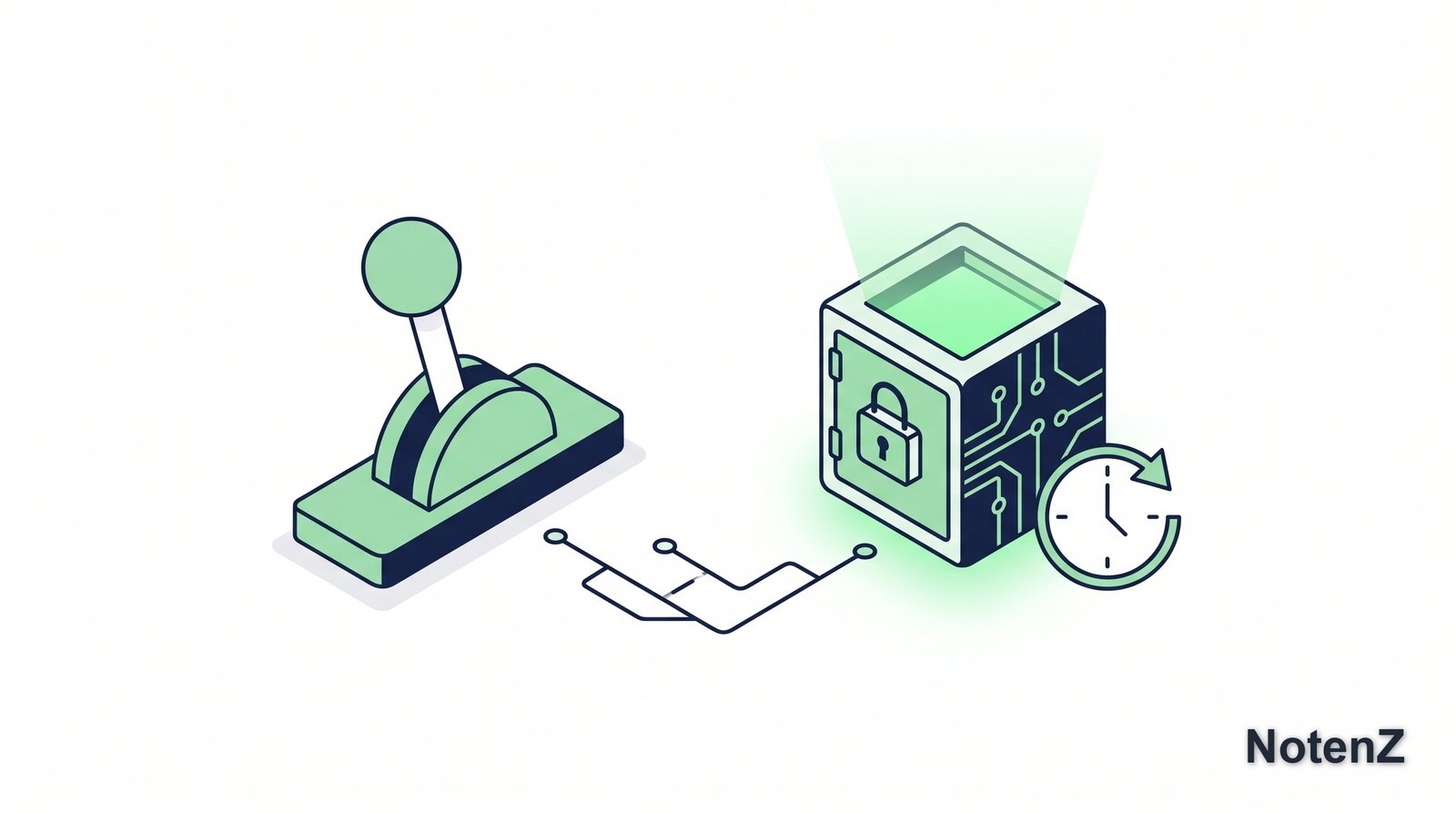
A "dead man's switch" is a system that takes a specific action automatically if you stop interacting with it. The name comes from old industrial machinery: a train operator holds down a pedal, and if they let go (because something happens to them), the train brakes on its own. The same idea now exists for your digital life, and it's quietly becoming one of the simplest, cheapest forms of insurance a family can have.
How a dead man's switch app actually works
The mechanics are simple. You store information in an encrypted vault — passwords, account locations, instructions, final wishes, whatever your family would need. You check in periodically, usually with one click from an email or text link, just to confirm you're okay. As long as you keep checking in, nothing happens and nobody but you can see what's in the vault.
If you miss a check-in, the app doesn't panic immediately. It enters a grace period and tries to reach you across multiple channels — email, SMS, sometimes Telegram or WhatsApp. Only if all of those go unanswered for the full grace period does it deliver the vault to the people you've designated. At that point, recipients get exactly what was prepared for them, nothing more.
Why this protects your family more than a will does
A will deals with assets and legal ownership, and it usually takes months to execute through probate. It doesn't help your family find your accounts in the meantime, and it definitely doesn't hand over passwords — lawyers generally won't (and shouldn't) be the ones holding your login credentials.
A dead man's switch fills that specific gap. It's not a replacement for a will or for proper estate planning — it's the layer that makes sure the practical, day-to-day information (where things are, how to access them, who to call) reaches the right people quickly, without waiting on any legal process at all.
Who actually needs one
- Anyone holding cryptocurrency in a self-custodied wallet — there is no customer support line for a lost seed phrase
- Solo founders or freelancers whose clients/team would need access to business accounts if they suddenly went quiet
- People who travel frequently or live far from family, where "just ask them" isn't realistic
- Anyone who is the only person who knows where the important accounts and documents are — which, for most people, is everyone
What separates a good dead man's switch from a risky one
Encryption that actually means something. Your vault contents should be encrypted such that even the service provider can't casually browse them. Look for end-to-end or zero-knowledge options for your most sensitive items.
A real grace period with multiple check-in channels. A switch that fires after a single missed email is a switch that will fire by accident — spam filters, a dead phone battery, a vacation with no signal. The grace period and multi-channel nudges are what make the difference between "insurance" and "anxiety machine."
A recall window. If the vault does get delivered and it turns out to be a false alarm, you want a window where you can recall it before recipients open anything.
Control over who sees what, and when. Not every recipient needs every item, and not every item needs to arrive at the same time.
Setting one up takes less time than you'd think
The whole setup — writing down the key information, choosing a check-in interval, adding the people who should be notified — takes about the same amount of time as setting up a new phone. After that, it runs quietly in the background. You check in when prompted, and otherwise you don't think about it again. That's the point: the work happens once, up front, while everything is fine.
Ready to try it yourself? Follow the 5-minute setup guide, or read what happens to your accounts if you never set one up.
If part of your estate includes crypto, back up your recovery phrase safely with the free Seed Splitter, which splits it into three paper cards where any two restore the original.
Related Articles
-
Why we retired the free plan
Jul 23, 2026
-
How to Add Notenz to Your Home Screen (iOS and Android)
Jul 2, 2026
-
Digital Legacy Planning: A Practical Guide for Financial Advisors
Jun 28, 2026