Emergency Contact Automation for Solo Travelers
June 17, 2026
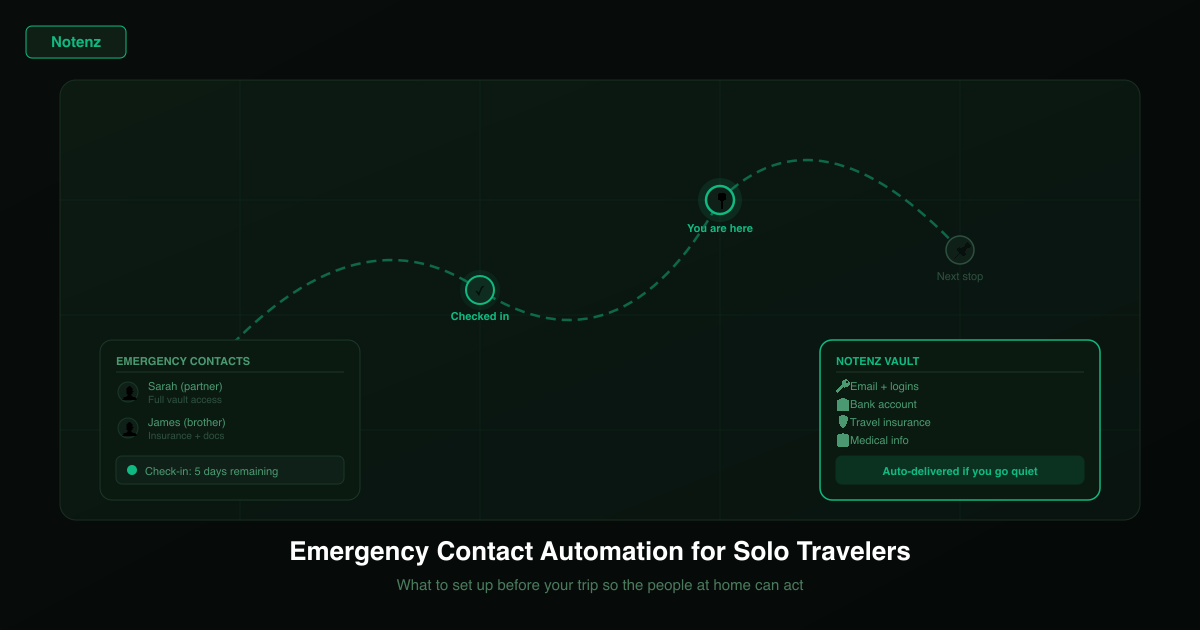
Solo travel has a specific risk that group travel doesn't: if something goes wrong, there's no one nearby who knows your situation, your contacts, or even that anything has happened. The gap between "something went wrong" and "someone starts looking" can stretch from hours to days.
Most solo travelers think about physical safety: travel insurance, copies of passports, emergency numbers. Fewer think about what happens to their digital accounts and finances if they're incapacitated or unreachable for an extended period. Both matter.
The two problems solo travel creates
The first is immediate: someone needs to know you're missing. This is the role of a real-time check-in app: set a timer, check in when you reach each destination, and if you miss a check-in, your emergency contact gets an alert. Apps like Kitestring, bSafe, or a simple WhatsApp protocol with a trusted friend handle this.
The second problem is less obvious but equally important: if you're incapacitated for more than a few days, or if the worst happens, who can access your financial accounts? Who knows which insurance policy to call? Who has your passwords?
For solo travelers without a partner or spouse at home, this second problem is often completely unplanned. The bank account is inaccessible. Rent goes unpaid. A family member is trying to cancel subscriptions and close accounts without any of the login details.
What to set up before a solo trip
1. A real-time check-in protocol
Agree on a check-in schedule with someone at home before you leave. Daily works for high-risk destinations. Every 2-3 days works for most solo travel. The key is agreeing in advance: "If I haven't messaged by [time], try calling. If no answer by [time + 12 hours], contact the embassy/local authorities."
This doesn't need an app. A daily voice note or message with your location is enough. What matters is that someone knows the protocol and will actually follow it.
2. A document with the basics
Leave a physical or digital document with a trusted person at home that includes:
- Your itinerary (accommodations, flight details, rough schedule)
- Travel insurance details: policy number, 24h emergency line
- Your bank and the phone number to freeze or access the account
- Your embassy or consulate contact in each country
- Any pre-existing medical conditions and medications
This is a short document. It doesn't need to be comprehensive, just enough that someone can act quickly in the first 24-48 hours.
3. Access to your accounts if you're unreachable
This is the part most solo travelers skip. If you're in hospital for two weeks without phone access, who can pay your rent? Who can access your accounts? Who knows your email password?
For most people, the honest answer is nobody. Everything is locked to a phone that's either in a hospital bag or at the bottom of a river.
The practical solution is to give one trusted person emergency access to the accounts that matter most: email (for account recovery), primary bank account, and any accounts with significant funds or automatic payments. This can be done via a password manager's emergency access feature, a secure note with a trusted person, or a dedicated vault service.
Automated emergency contact for digital accounts
For solo travelers who travel frequently or for extended periods, setting up automated emergency contact for digital accounts is worth doing properly. The goal is a system that doesn't rely on you being available to explain it.
A dead man's switch service like Notenz works as follows: you store your important account details, insurance information, and any important messages in an encrypted vault. You check in weekly (or at whatever interval you set). If you stop checking in for longer than your check-in window plus a grace period, your vault is automatically delivered to whoever you've designated.
For a solo traveler, this means: if something goes wrong and you're unreachable for two weeks, the people who need access get it automatically. No one has to guess whether to act. No one needs to know in advance where you kept your passwords.
The mindset shift
Most solo travel safety advice is about reducing the chance that something goes wrong: don't flash valuables, stay in well-lit areas, share your location. All useful.
But some of the most useful preparation is about what happens if something goes wrong anyway. The people at home who care about you should be able to act quickly and have what they need. That requires setting something up before you leave, not improvising afterward.
It's an hour of preparation. It makes a material difference if it ever matters.
A pre-trip checklist
- Agree on a check-in schedule with someone at home
- Share your itinerary (flights, accommodations, rough dates)
- Write down travel insurance policy number and 24h emergency line
- Make sure someone can access your primary email in an emergency
- Make sure someone can access your primary bank account
- Leave medical information with someone who can share it if needed
- Set up automated vault delivery if you travel solo regularly
Notenz gives solo travelers automated emergency access for their digital accounts. Store your passwords, documents, and important information in an encrypted vault. If you go quiet, your people get access automatically.
Set up before your next tripRelated Articles
-
Why we retired the free plan
Jul 23, 2026
-
How to Add Notenz to Your Home Screen (iOS and Android)
Jul 2, 2026
-
Digital Legacy Planning: A Practical Guide for Financial Advisors
Jun 28, 2026